In short: Eleanor Powell (1912 to 1982) was the leading female tap dancer of Hollywood’s golden age. MGM built musicals around her solos in the 1930s, and her “Begin the Beguine” duet with Fred Astaire in Broadway Melody of 1940 is often called one of the finest tap numbers ever filmed. She was one of the few dancers whose name went above the title. The Dance Heritage Coalition named her one of America’s Irreplaceable Dance Treasures in 2000.
Eleanor Powell danced like a drummer. Her taps were fast, clean and low to the floor, and she could keep them going through spins, kicks and leaps without losing a beat. Where many female dancers of the 1930s were cast as partners, Powell was cast as the main event. Studios built enormous sets so she could tap across them alone.
This profile covers how she learned to tap, her Broadway years, the MGM musicals, her one film with Fred Astaire and her later life. She sits on the same list of America’s Irreplaceable Dance Treasures as the director Busby Berkeley, who staged one of her later numbers.

Early life and training
Powell was born in Springfield, Massachusetts, on 21 November 1912. She was a shy child, and her mother sent her to ballet and acrobatic classes to help. By her early teens she was performing in summer shows in Atlantic City, New Jersey, doing acrobatic and ballet routines.
When she arrived in New York she found that Broadway wanted tap, which she could not yet do. She took a short course of lessons and then drilled herself. A story she told later is that she practised with weights tied around her waist to keep her centre low and her feet close to the floor. Whatever the exact method, the result was a style built on precision rather than flash.
Broadway star
By the early 1930s Powell was a featured dancer in Broadway revues and musicals, including Follow Thru and Fine and Dandy. Newspapers began calling her the world’s greatest female tap dancer. That reputation brought her to Hollywood, first for a small appearance in George White’s Scandals (1935) and then to MGM.
The MGM years
MGM signed Powell in 1935 and quickly made her a star. Broadway Melody of 1936 was a hit, and the studio followed it with a run of lavish musicals:
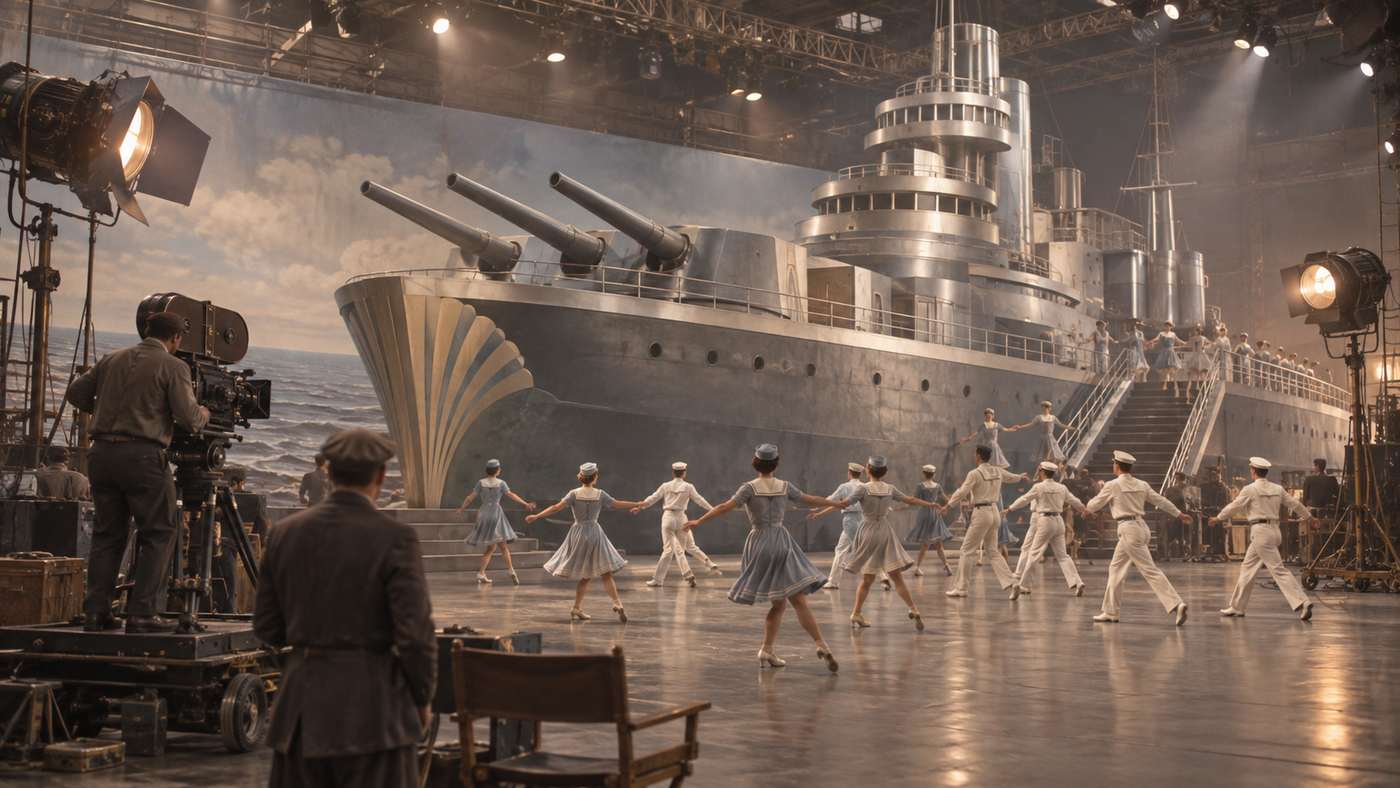
- Born to Dance (1936), with songs by Cole Porter and James Stewart as her co-star. Its finale, “Swingin’ the Jinx Away”, is set on a giant battleship deck.
- Broadway Melody of 1938 (1937), which also introduced a young Judy Garland.
- Rosalie (1937), a romantic musical with Nelson Eddy and a huge drum number.
- Honolulu (1939), which includes a hula-style tap number.
- Broadway Melody of 1940 (1940), her only film with Fred Astaire.
- Lady Be Good (1941), with a “Fascinating Rhythm” number staged by Busby Berkeley.
- Ship Ahoy (1942), where she taps out a message in Morse code.
The plots of these films are thin. They exist to set up her solos, which usually come at the end and run for several minutes on a vast set. Powell often worked out her own routines, and she was known for rehearsing until every step was exact.
“Begin the Beguine” with Fred Astaire
Broadway Melody of 1940 paired the two finest tap dancers in Hollywood for the only time. Accounts from the set say that each was a little intimidated by the other. Astaire was used to leading partners who followed him; Powell was used to dancing alone.
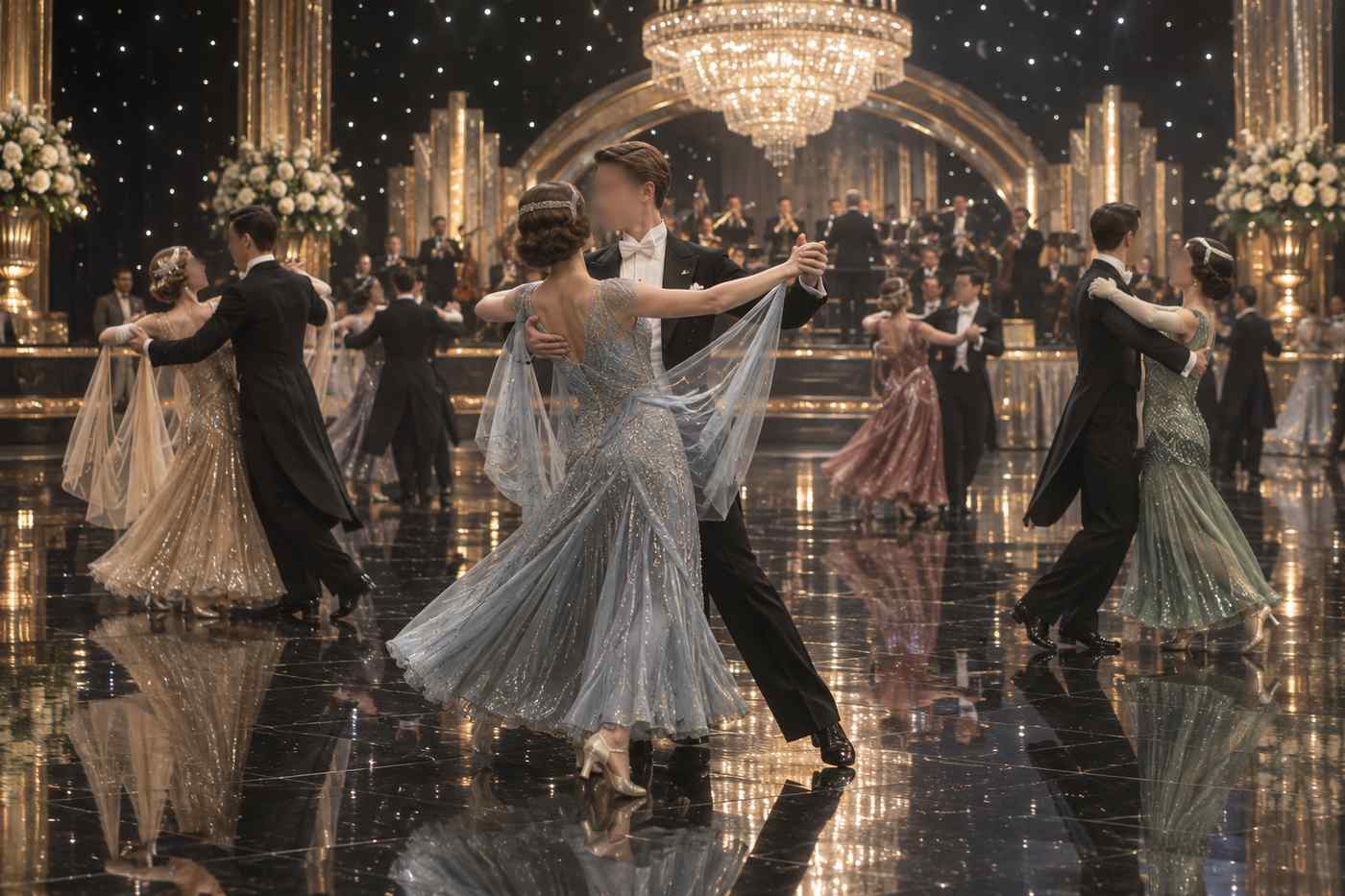
The result is the “Begin the Beguine” finale, set to Cole Porter’s song. The first part is a slow, Latin-tinged duet. The second is a swing section in which the pair tap side by side, then challenge each other in turn, with no backing dancers and few cuts. It is filmed on a black mirrored floor under a backdrop of stars. When MGM made its 1974 tribute film That’s Entertainment!, Frank Sinatra introduced the clip by saying, in effect, that you could wait a lifetime and not see anything like it again.
What made her style different
Three things stand out when you watch Powell. First, speed: she could sustain very fast tap patterns for long passages. Second, clarity: each sound is separate, which is why her numbers record so well. Third, range: she mixed tap with ballet turns, high kicks and acrobatic backbends, so her solos read as full dance numbers rather than displays of footwork.
She also danced in a way that was unusual for a woman on screen at the time. Her routines were athletic and rhythmic first, glamorous second. That made her a model for later generations of women tap dancers, who often cite her as proof that a female dancer could carry a number on rhythm alone.
Later life
Powell married the actor Glenn Ford in 1943 and largely stepped back from films to raise their son, Peter. In the 1950s she hosted a religious television programme for children, The Faith of Our Children, which won several local Emmy awards. After her divorce in 1959 she returned to performing with a successful nightclub act in the early 1960s, then retired. She died in Beverly Hills on 11 February 1982.
Why she is a dance treasure
Powell is on the 2000 list of America’s Irreplaceable Dance Treasures because she set the standard for women in screen tap and because her filmed solos are some of the clearest records of 1930s tap technique. Her films are, in a real sense, an archive of the form at its peak. For the wider story of how tap and other popular forms developed, see our overview of dance styles and history.
Key takeaways
- Eleanor Powell (1912 to 1982) was Hollywood’s leading female tap dancer of the 1930s and early 1940s.
- She trained in ballet and acrobatics before teaching herself a fast, precise tap style.
- MGM built musicals around her solos, including Born to Dance and Rosalie.
- Her “Begin the Beguine” duet with Fred Astaire in Broadway Melody of 1940 is a landmark of filmed tap.
- She was named one of America’s Irreplaceable Dance Treasures in 2000.
Common questions
Was Eleanor Powell a better dancer than Fred Astaire?
They had different strengths. Powell was the more athletic and rhythmically intense tapper; Astaire was the greater all-round stylist and partner. Their one duet is admired because they were evenly matched.
How many films did Eleanor Powell make with Fred Astaire?
One: Broadway Melody of 1940.
What is Eleanor Powell’s most famous number?
“Begin the Beguine” with Fred Astaire. Among her solos, the finales of Born to Dance and Rosalie and the Morse code routine in Ship Ahoy are the best known.
Why did Eleanor Powell stop making films?
She cut back after marrying Glenn Ford in 1943 to focus on family. Her last film appearance was a cameo in The Duchess of Idaho (1950).
Where can I watch her dancing?
Most of her MGM musicals are available on disc and through classic film streaming services. The That’s Entertainment! compilations include several of her numbers.
How we wrote this: This profile is based on Britannica, standard filmographies, and published reviews of her films. Where stories about her training come from her own later interviews, we say so. Last checked November 2026.